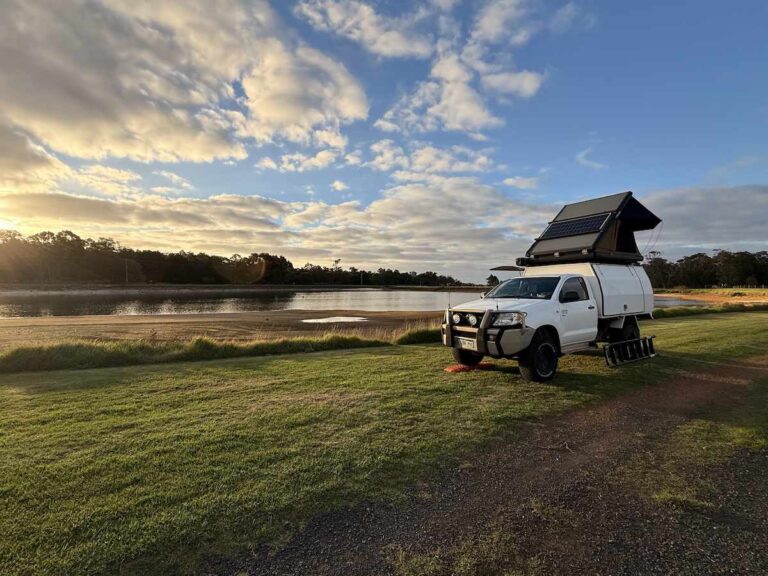
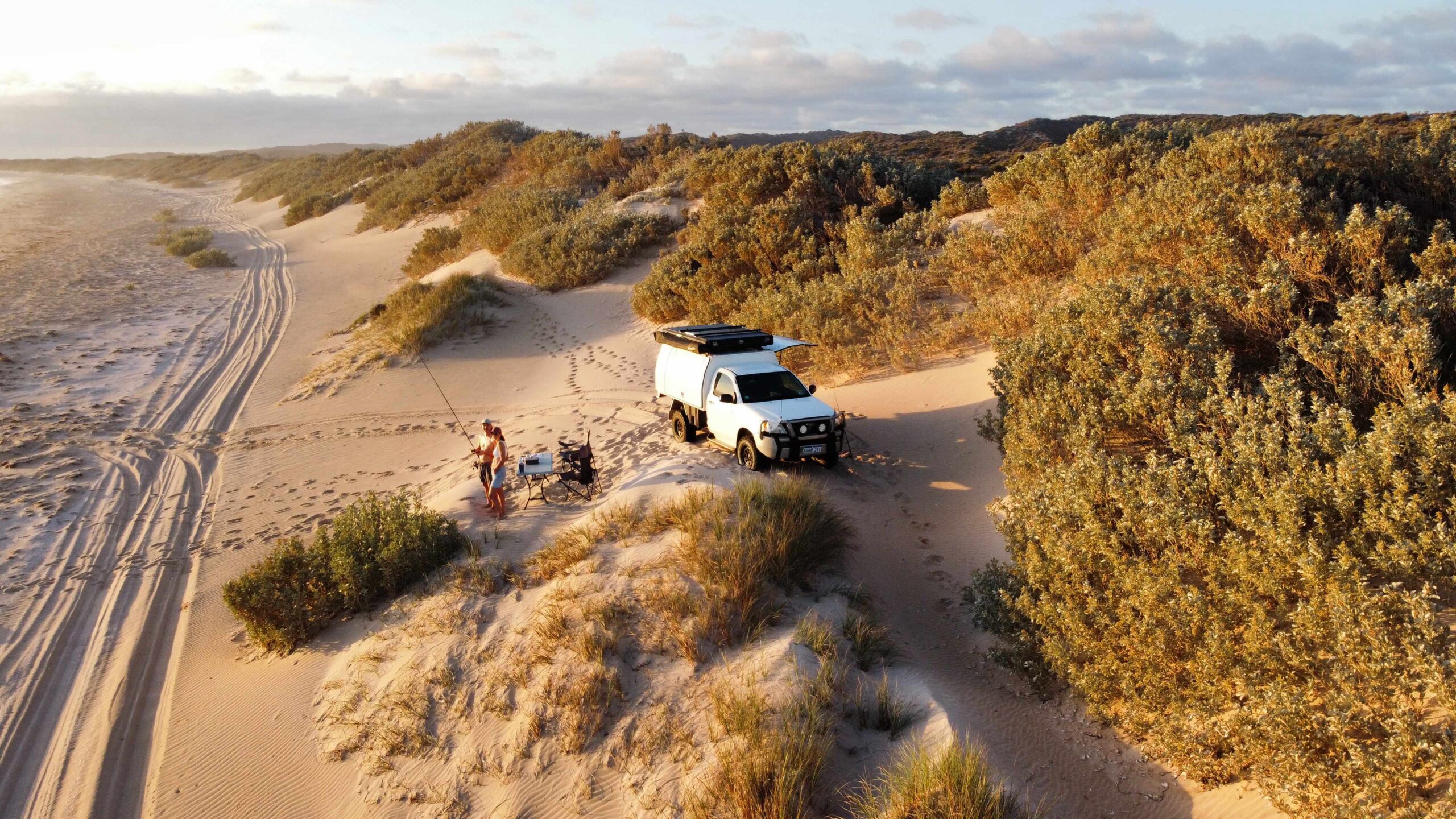
Australia looks pretty simple in photos.
Empty beaches.
A 4WD parked by the ocean.
Campfires under the stars.
And honestly?
That’s exactly why we love road trips through Western Australia.
But once you actually start travelling around WA, you quickly realise that camping here feels a little different to Europe. Some things take getting used to. Other things make you fall in love with Australia even more.
After countless weekends, road trips and dusty tracks around WA, these are the things that surprised us the most when we first started exploring Australia.
National Park Pass – you’ll probably end up needing one anyway
Once you start travelling through Western Australia, you’ll quickly realise how many incredible places are located inside National Parks.
From famous spots like Nature’s Window in Kalbarri National Park to remote campgrounds, hiking trails and off-road tracks — some of the best places in WA sit behind those park signs.
Some National Parks require a pass just to enter, others only for camping.
For us, the annual pass has always been worth it.
If you’re planning multiple trips throughout the year, it saves both money and the hassle of constantly buying individual tickets.
And realistically:
once you start exploring WA, you somehow always end up back in another National Park anyway.
Fully Self Contained – suddenly an important camping term
One thing that surprises many travellers in Australia:
camping rules are actually taken pretty seriously.
Especially at remote bush camps, farm stays or National Park campgrounds, you’ll constantly come across the same phrase:
“Fully self contained”.
That was completely new to us at first too.
Basically, it means you should be able to camp independently without relying too much on infrastructure around you and you must have your own (chemical) toilet.
At first it feels slightly over the top — until you realise how remote some of these campgrounds actually are.
BertaTracks Insight
Since we noticed that, we always carry our chemical toilet with us.
Fire Bans & Campfires – Australia takes fire seriously
For many people, camping automatically means campfires.
In Australia, things work a little differently.
During summer, large parts of WA are often under strict Fire Bans, meaning campfires are completely prohibited.
At first, that can feel surprisingly strict.
But once you’ve seen how much of the landscape has already been affected by bushfires, those rules start making a lot more sense.
Hot temperatures, dry bush and strong winds can turn dangerous incredibly quickly here.
That’s why checking current fire restrictions before every trip becomes pretty normal in WA.
Beach Driving – lower your tyre pressure and enjoy
Driving directly along the beach is one of those classic Australian moments.
Windows down.
Ocean beside you.
And suddenly you’re driving somewhere that would probably have fences all over it back home.
To make your first beach drive a relaxed one, a few simple things help:
- Lower your tyre pressure
- Engage 4WD before reaching the soft sand
- Stick to existing tracks at first
- Drive at your own pace — even if some Aussies seem to fly past you
BertaTracks Insight
Beach driving becomes a lot more fun once you trust your vehicle a little more — and your tyres hold a little less air.
Phone Reception – suddenly gone
As good as reception is around cities like Perth, it can disappear surprisingly quickly once you leave town.
On longer road trips through Western Australia, there are huge areas with little to no signal at all.
And we really mean no signal.
That’s why offline maps quickly become part of your standard setup in WA.
Depending on how remote your trip is, things like:
- UHF radios
- Personal Locator Beacons
- or satellite communication
can actually make a lot of sense.
Especially if you’re travelling solo or exploring less popular tracks.
Distances in WA are bigger than you think
On Google Maps, 300 kilometres doesn’t look too bad.
In Western Australia, that can easily mean:
hours of driving, very little traffic and long stretches without fuel stations or reception.
Most people underestimate distances in WA at first.
And when an Aussie says:
“It’s just around the corner”
… that could still mean another two hours on the road.
BertaTracks Insight
In WA, it’s usually smarter to fuel up early rather than hoping for the next servo.
Out in the middle of nowhere, everyone waves
Back home, people usually just drive past each other.
In WA, things feel different.
Whether you’re on a remote gravel road, a bush track or somewhere completely out in the middle of nowhere — people suddenly lift a hand off the steering wheel and wave as they pass.
And after a while, you automatically start doing the same.
Maybe it’s because of the distances.
Maybe it’s because people out there tend to look out for each other a bit more.
Either way, it’s one of those small things that makes road trips through WA feel special.
The Sundowner slowly becomes part of the routine
At some point, it just happens naturally.
You stop choosing campsites based purely on location or convenience — and start picking them based on how good sunset will look from camp.
The Sundowner becomes part of the routine.
And honestly, maybe that’s one of the best things about travelling through WA:
you slowly learn how to slow down a little yourself.
Final Thoughts
Camping and road tripping through Western Australia feels different to what many travellers expect at first.
Some parts feel chaotic.
Others feel incredibly free.
And somehow, that combination is exactly what makes travelling here so special.
In the end, it’s usually not only the famous places you remember most.
It’s the smaller moments:
dusty tracks, salty cars, a Sundowner by the ocean and that feeling of being completely out there somewhere in WA.
Planning your own WA adventure?
👉 Download the free BertaTracks Camping Checklist & Beginner Guide to help you get started.
FAQ – Camping & Road Trips in Western Australia
Do you need a National Park Pass in Western Australia?
For many National Parks in WA, you’ll need a park pass either for entry or for camping. If you’re planning multiple road trips throughout the year, the annual pass is usually well worth it.
What does “fully self contained” actually mean?
It means you should be able to camp independently without relying on facilities around you. Many bush camps and farm stays require things like your own toilet, water supply and waste water storage.
Can you drive on beaches in Australia?
Yes — beach driving is very common in many parts of Western Australia. A proper 4WD, lower tyre pressure and a little preparation make a huge difference, especially for beginners.
Is there phone reception everywhere in WA?
Definitely not. Once you leave larger towns and cities, reception can disappear pretty quickly. Offline maps are highly recommended, especially for longer road trips or remote areas.
Are campfires always allowed when camping in Australia?
No. During summer, many regions in WA operate under strict Fire Bans due to bushfire risk. Before every trip, it’s worth checking the current fire restrictions for the area you’re travelling to.
Do I need a 4WD for camping in Western Australia?
Not always. Many amazing campgrounds and National Parks are accessible with a normal vehicle. However, for beach driving, remote tracks or more off-grid camping spots, a 4WD definitely opens up more of WA.
What should you always carry on a WA road trip?
A few essentials quickly become part of every WA trip:
- plenty of water
- offline maps
- recovery gear
- a tyre compressor
- shovel
- and more fuel than you think you’ll need
Distances in Western Australia can be bigger than expected.