
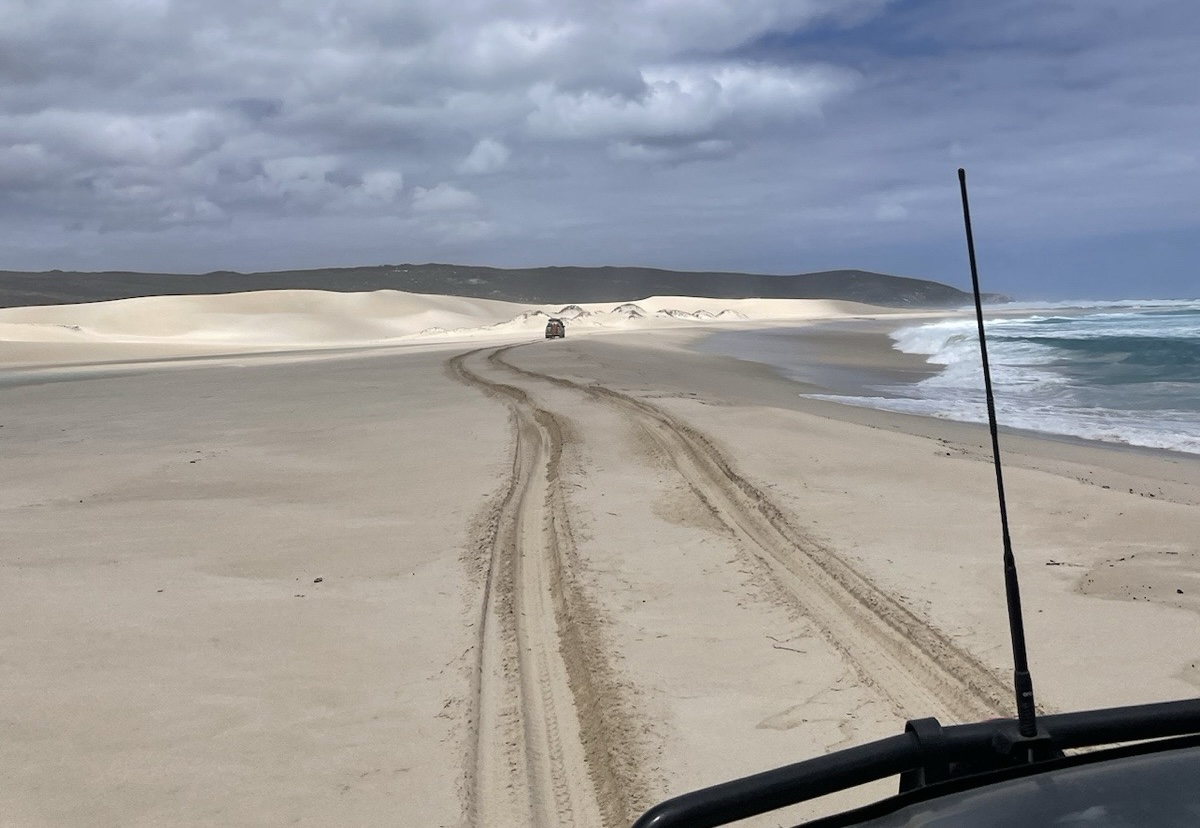
The Australian way to say getting stuck is getting bogged – it sounds much nicer but at the end it’s the same hassle to get out.
🚙 How to Safely Drive on Sand in Western Australia
Driving on the beach is definitely one of the best off-road experiences in Western Australia—but it can also go wrong quickly if you’re not prepared and if you don’t know the conditions.
With a few simple techniques, you can turn your beach drive into an unforgettable adventure — instead of an expensive recovery.
Even if you return to a beach you’ve visited before, conditions can change dramatically. Weather over the past days or weeks, tides, spring tides, and human activity all affect how firm—or soft—the sand is. Just keep that in mind when driving on the beach!
8 Essential Beach Driving Tips
1. Lower Your Tyre Pressure Before Entering the Beach
Before heading onto the sand, always stop and reduce your tyre pressure.
You’ll usually find:
- A parking area
- A beach access point
- Or the end of a sealed or gravel road, that offers enough space to lower your tyre pressure
👉 A good starting point:
- 20 PSI (≈1.4 bar)
Lower tyre pressure increases your tyre’s surface area and improves traction on soft sand, so it makes it much more easier to drive at the beach.
2. Engage 4WD Mode
This may sound obvious, but it’s critical.
Once your tyres are deflated and you’re about to enter the beach:
- Switch your vehicle into 4WD High (H4)
For most beach conditions, H4 is sufficient.
(If you want to get a deeper understanding of the difference of H4 and L4, I explain H4 vs L4 in another post.)
3. Follow Existing Tracks
If you’re unsure about conditions or new to beach driving:
👉 Stay in existing tracks.
- Let the car follow the tracks naturally
- Avoid oversteering
- Drive smoothly and with control
- Drive in with speed that makes you feel comfortable; you don’t need to drive too fast – just drive easy and enjoy it!
In Western Australia, you’ll always find tracks at the beach —even if the beach feels really remote!
4. Don’t Push It When You Get Stuck
If you start losing momentum or get stuck:
❌ Don’t keep accelerating aggressively
This is how you:
- Dig yourself deeper and deeper
- End up sitting on your axles – worst case
👉 Instead:
- Stop early
- Assess the situation
5. Use the “Forward & Reverse” Technique
If you’re stuck:
- Try reversing out carefully
- Keep your wheels aligned in the tracks, when you try to reverse out
- If necessary: gently move forward and backward a couple of times, until you manage it out
- Often if you managed it to reverse out, you can drive through it with enough speed. But you have to drive through it with some courage, and not slow down to much.
Often, a few controlled attempts are enough to regain traction.
6. Lower Tyre Pressure Further if Needed
If nothing is working:
👉 Reduce tyre pressure further.
Recommended range:
- 14–16 PSI (≈1.0–1.1 bar)
⚠️ Important:
- Don’t go too low
- To name a minimum, I would say you should not go lower than 0.7 bar (~10 PSI) –> there’s a risk of the tyre coming off the rim, if the tyre pressure is too low
That said, the ideal pressure depends on:
- Your vehicle with its engine power
- Your load that increases your total weight
7. Dig Instead of Spinning Your Wheels
If you’re properly stuck:
👉 It’s time to dig.
👉 Always carry a shovel or a folding spade! That is an essential gear while off-road driving!
What to do:
- Dig around all four tyres
- Clear sand in front and at back of the tyres
- Create a smoother path
💡 Tip:
15 minutes of digging is much better than being stuck to your axles.
Once done, go back to step 5 (forward & reverse).
8. How to Turn Around Easily
If conditions feel too difficult, you don’t feel comfortable anymore or you just want to go back, keep the following in mind:
👉 Turn around with control!
- Use a wide turning circle
- Keep momentum and don’t drive too slow
- Avoid sharp steering (this slows you down in soft sand)
⚠️ Final Tip: Getting Stuck Is Normal
Getting stuck—what Australians call “getting bogged”—is part of the experience.
Even experienced drivers get bogged because:
- Conditions constantly change
- Sand can look firm but be very soft underneath
👉 The key is knowing how to react.
🗺️ Explore More Tracks
If you’re looking for the best beach access points and 4WD tracks in Western Australia, check out my interactive map where I’ve pinned:
- Curated Off-road Tracks
- Handpicked Campsites
- Beach Access Points
- Berta Picks
👉 Test the Free Margaret River Region Map
I hope you will enjoy the beautiful and remote beaches in Western Australia as much as we do! Stay safe and have fun!